
So much of the conversation around autism understandably centers on the autistic child. But siblings are navigating their own version of this experience — one that’s rarely talked about, and often carries feelings they don’t have the words for yet.
Common Feelings Siblings Experience
It’s normal for siblings to feel a mix of love, protectiveness, embarrassment, jealousy, and guilt — sometimes all in the same day. A sibling might feel guilty for wanting attention when their brother or sister “needs it more,” or embarrassed in public without understanding why that feels wrong to admit. None of these feelings mean something is wrong with the sibling — they mean they need a space to process them.
Age-Appropriate Ways to Explain Autism
Young children do best with simple, concrete language: “Your brother’s brain works differently, and that means some things are harder for him and some things are easier.” As siblings get older, they can handle more nuance — including honest conversations about what autism is, what it isn’t, and how to respond when peers ask questions or make comments.
Making Space for One-on-One Time
Therapy appointments, IEP meetings, and crisis moments can consume a disproportionate share of family attention. Protecting even 20-30 minutes of dedicated one-on-one time with the sibling each week — doing something they choose — reinforces that they matter as their own person, not just as “the sibling of.”
Including Siblings in Therapy (When Appropriate)
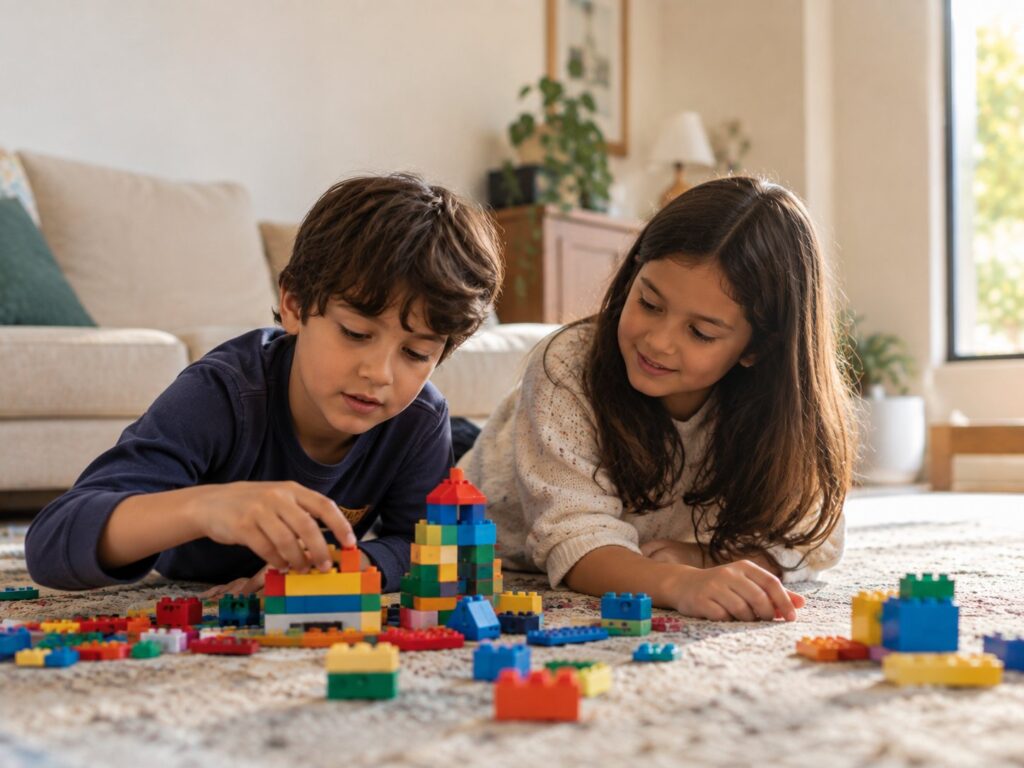
Many ABA programs can incorporate structured sibling sessions to build cooperative play and communication skills between siblings directly, under the guidance of a therapist. This isn’t about turning the sibling into a co-therapist — it’s about giving both children tools to connect more easily on their own.
Watching for Signs a Sibling Needs Extra Support
Withdrawal, drop in grades, increased anxiety, or resistance to talking about their brother or sister at all can be signs that a sibling could benefit from their own support — whether that’s a support group, a counselor, or simply more intentional conversation at home.
Resources for Sibling Support
Organizations like the Sibling Support Project offer “Sibshops” — peer support groups designed specifically for siblings of kids with disabilities — which can be a valuable complement to what happens at home.
Supporting the whole family is part of supporting your child. If you’d like guidance on involving siblings in your child’s therapy plan, we’re happy to talk through what that could look like.
Ready to learn more? WeClinic Health offers BCBA-supervised ABA therapy across South Florida with no waiting list. Contact us today to schedule an evaluation or verify your insurance benefits.
📞 (305) 429-9092 | 🌐 weclinic.us