
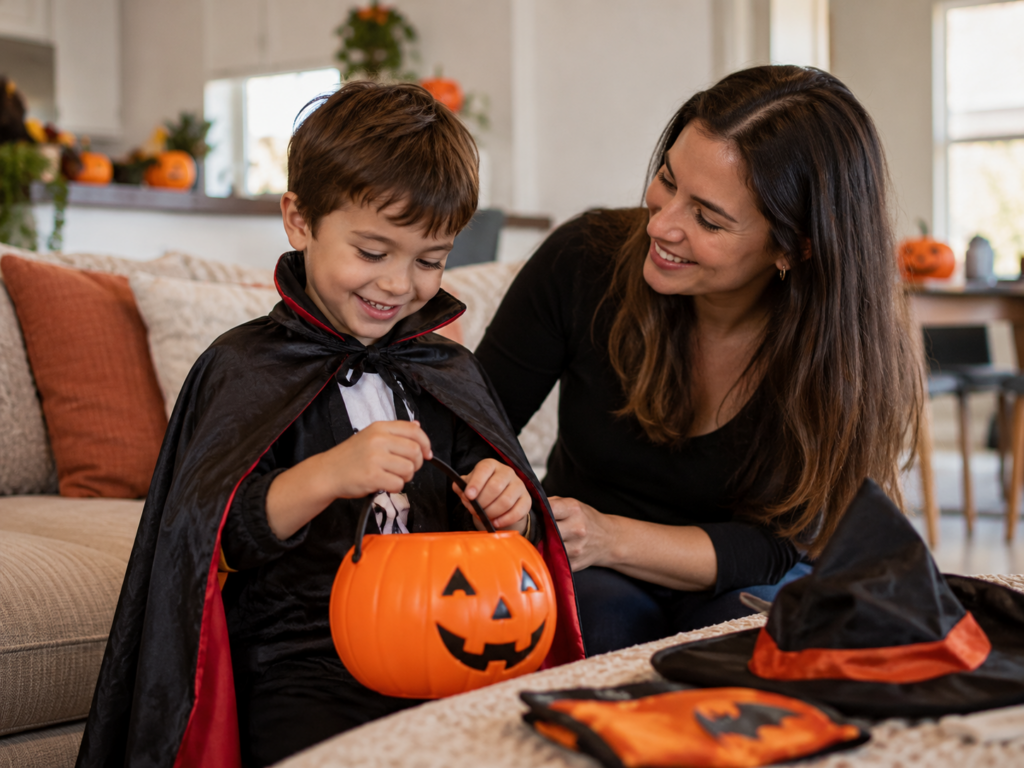
Halloween in South Florida is big: mall-wide trick-or-treating, neighborhood parades, haunted houses, and fireworks on Sunset Drive. For many children that’s pure excitement. For a child with autism or ADHD, the same night can mean itchy fabrics, flashing lights, masked strangers, and a routine that falls apart after dark. With a little planning, Halloween can be fun instead of a night that ends in a meltdown.
Why Halloween Can Be Hard for Neurodivergent Children
Halloween breaks almost every rule of predictability at once. Familiar people look different, familiar streets get crowded and loud, bedtime shifts, and there’s a social script (knock, say “trick or treat,” say “thank you”) that has to be performed with strangers. A child who struggles on Halloween isn’t being difficult. Their nervous system is processing a lot of unexpected input at the same time.
Choose the Costume Together, and Test It Early
The best costume is one your child can wear comfortably for an hour.
- Let your child pick from two or three sensory-safe options rather than an open-ended choice
- Avoid masks, face paint, tags, and stiff or scratchy fabrics if your child is touch-sensitive
- A themed T-shirt, pajamas, or a favorite hoodie with a simple accessory counts as a costume
- Do two or three “dress rehearsals” at home in the days before
Preview the Night With a Visual Schedule or Social Story
Show your child what will happen, in order: costume on, car ride, three houses, candy check, home, bath, bed. Photos of the actual street or venue help. Practice the doorstep script at your own front door so the real interaction feels familiar.
Look for Sensory-Friendly Events in Miami-Dade and Broward
Many South Florida venues now offer quieter, lower-stimulation options during October, such as indoor trick-or-treating, reduced crowds, and calm-down spaces. Miami Children’s Museum, for example, runs regular sensory-friendly hours. Check event pages for terms like “sensory-friendly,” “quiet hour,” or “calming tent,” and look for ticketed events with capped attendance.
Build an Exit Plan Before You Leave
Decide in advance how you’ll know it’s time to go home, and tell your child. Bring noise-reducing headphones, a comfort item, and a familiar snack. Ending early on a good note is a success, not a failure.
If Your Child Prefers to Stay Home
Handing out candy, watching a not-scary movie, or decorating cookies are all real ways to celebrate. If doorbells are a trigger, a sign on the door and a bowl on the porch work fine.
How ABA Supports Moments Like This
Holidays are a chance to practice skills in the real world. At WeClinic Health, our BCBAs can build seasonal goals into your child’s plan, such as tolerating a new costume, following a visual schedule in an unfamiliar setting, or using a functional way to ask for a break. Progress on these skills carries well beyond October.
A good Halloween is the one that works for your child. To learn how ABA can help your child handle new situations with more confidence, call (305) 429-9092 or visit weclinic.us.